
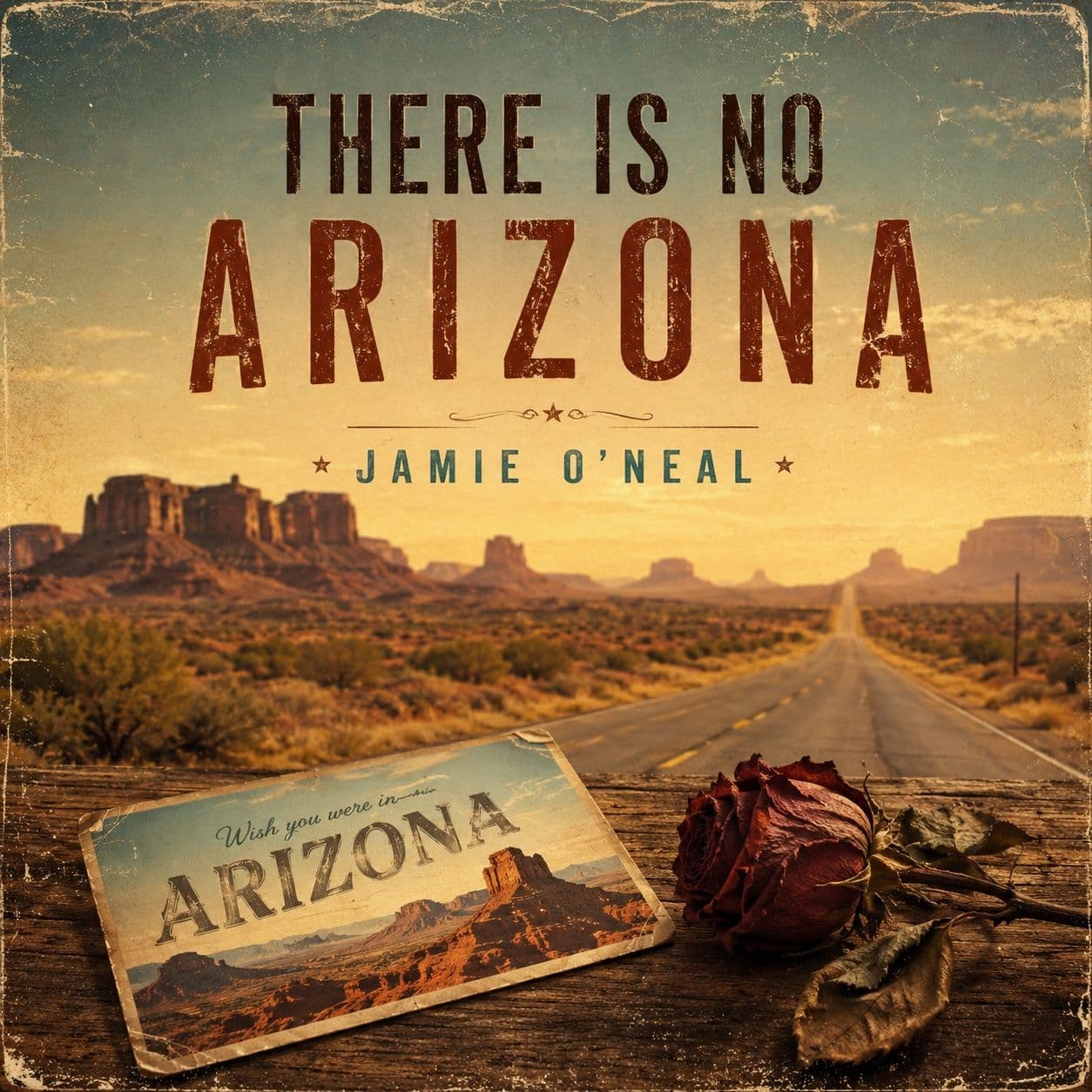
Jamie O’Neal’s “There Is No Arizona” Is Still One of Country Music’s Great Mirage Songs
Jamie O’Neal’s “There Is No Arizona” remains a masterclass in country-pop storytelling: a breakup song built not around a fight, but around the slow death of belief. With its desert imagery, aching vocal restraint, and devastating central metaphor, the track turns Arizona into something bigger than a place. It becomes a promise, a fantasy, and eventually, the proof that the person she was waiting for was never really coming back.
“Arizona becomes less a destination than a mirage — the place where every broken promise goes to disappear.”
Jamie O’Neal’s “There Is No Arizona” is one of those country songs that understands heartbreak is not always a dramatic explosion. Sometimes it is waiting. Sometimes it is explaining someone else’s absence to your friends. Sometimes it is staring at a postcard and slowly realizing the future you were promised was never actually being built.
Released in 2000 as O’Neal’s debut single, the song still feels remarkably sharp because its central idea is so strong. Arizona is not just a state here. It is a symbol of delay, denial, and emotional bargaining. The man leaves with the promise of a better life somewhere out west, and the narrator clings to that promise long after the evidence has turned against it. That is what gives the song its sting. It is not only about being abandoned. It is about the humiliation of hope.
O’Neal’s vocal performance is the reason the song holds up. She does not oversing the heartbreak. She lets it tighten gradually. There is a controlled ache in her delivery, the sound of someone trying to stay composed while her own story collapses around her. The restraint matters. A more melodramatic reading might have flattened the song into ordinary country betrayal. O’Neal gives it something more complicated: pride, confusion, embarrassment, longing, and finally, clarity.
The writing is elegant because it lets geography do emotional work. The Painted Desert, Sedona, the Grand Canyon, and Tombstone are not tossed in as decorative references. They build the fantasy piece by piece. Each landmark makes Arizona seem more vivid, more reachable, more cinematic — which makes the eventual realization even more brutal. The place sounds real. The promise does not.
Musically, “There Is No Arizona” sits in the polished country-pop lane of its era, but it avoids the glossy emptiness that can come with that territory. The production gives the song space, keeping the vocal at the center while allowing the arrangement to widen around the chorus. The result is radio-friendly without feeling disposable. It has the clean shape of a hit, but the emotional architecture of a short story.
The best country songs often turn one phrase into an entire world, and this one does exactly that. “There Is No Arizona” is a title that only becomes more devastating the deeper the song goes. At first, it sounds almost impossible. Of course Arizona exists. But by the end, the listener understands. The Arizona she was promised never existed. The version of love attached to it never existed either.
That is why the song still works decades later. It is not dated by its production or its early-2000s country-pop polish because the emotional mechanism remains painfully current. People still wait for calls that are not coming. They still defend someone who has already left. They still mistake distance for destiny. O’Neal captured that specific kind of heartbreak with precision.
As a debut single, “There Is No Arizona” was unusually mature. It introduced Jamie O’Neal not just as a strong vocalist, but as a singer who could carry narrative weight. The song does not rely on vocal fireworks or easy revenge. It trusts sadness, patience, and metaphor. That trust pays off.
More than twenty years later, “There Is No Arizona” still feels like one of country music’s great mirage songs: beautiful from a distance, devastating up close, and unforgettable once the illusion disappears.
This review links to official third-party listening platforms. Original Music Review does not host copyrighted audio files.
We review independent artists we discover.
You didn’t submit “There Is No Arizona” — we found it and wrote about it. There’s nothing to pay. If you’re Jamie O’Nealor represent them, share the review with your listeners, and send your next release our way whenever you’re ready.