
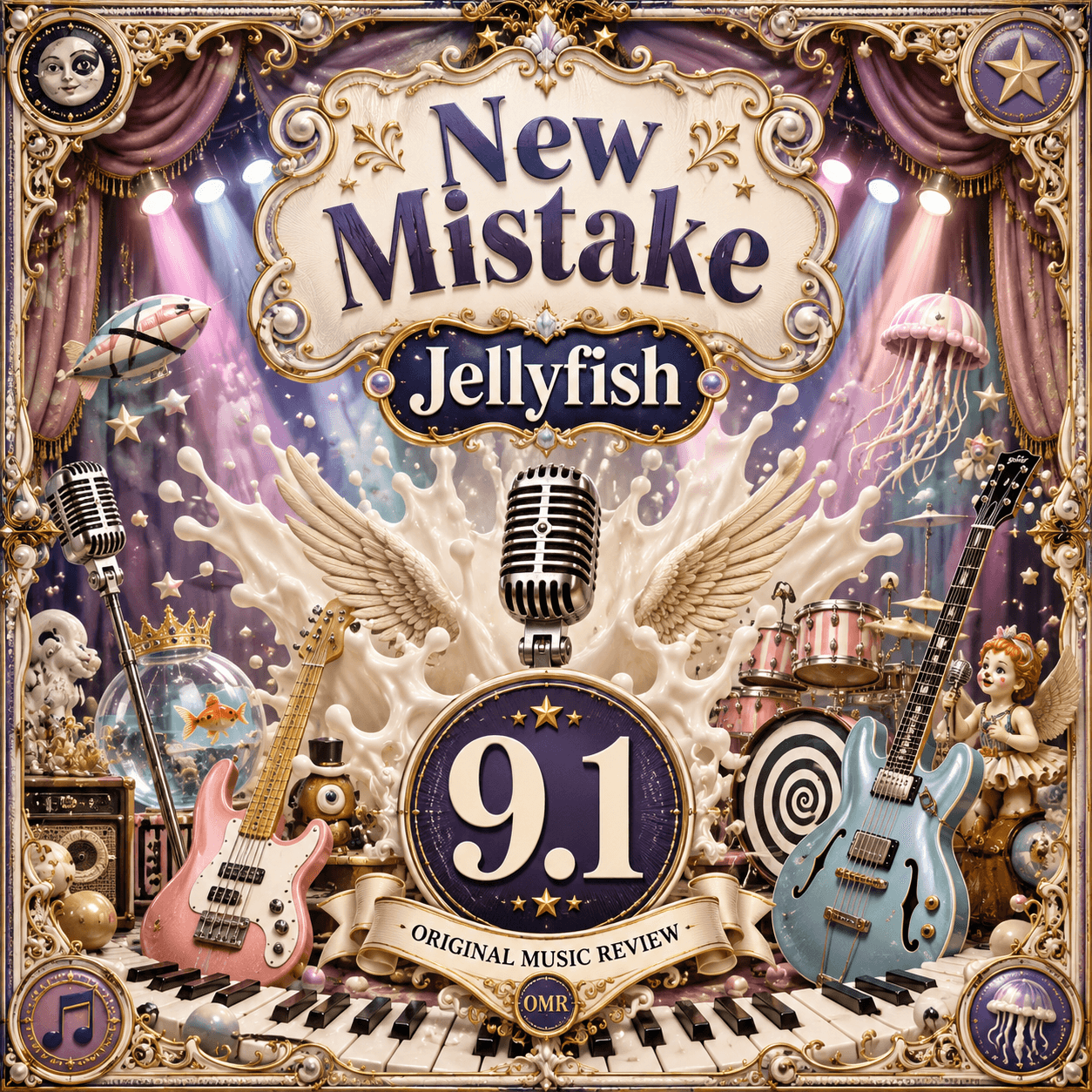
Jellyfish Build a Power-Pop Cathedral on “New Mistake”
Jellyfish’s “New Mistake” is power-pop at its most dazzling and faintly unhinged — a 1993 Spilt Milk highlight that stacks Queen harmonies, Beatles chord changes, and theatrical arrangement craft over a chorus engineered to feel like it has always existed.
“A power-pop masterclass disguised as a beautifully overdecorated nervous collapse.”
There are songs that sound like singles, and then there are songs that sound like a whole record collection having a nervous breakdown in four minutes. “New Mistake” is the latter: Jellyfish at their most dazzling, excessive, melodic, and faintly unhinged — a power-pop cathedral built by people who had clearly spent too much time studying Queen harmonies, Beatles chord changes, Cheap Trick choruses, and the emotional architecture of songs that refuse to sit still.
Released as a single from Jellyfish’s 1993 album Spilt Milk, “New Mistake” captures the band’s peculiar brilliance almost too perfectly: it is immaculate and messy, theatrical and wounded, sweet enough to pass as pop and complicated enough to scare off anyone who likes their hooks delivered without trapdoors. The song was written by Andy Sturmer and Roger Manning, and that partnership is all over it — the arrangement never simply accompanies the melody; it argues with it, decorates it, lifts it into the rafters, and occasionally seems determined to outshine it.
What makes “New Mistake” so remarkable is not just the craft, though the craft is absurd. It is the way Jellyfish make virtuosity feel emotionally unstable. Every harmony stack sounds like a grin forced a little too wide. Every drum fill and keyboard flourish arrives with the confidence of a band who knew exactly how ridiculous this could become and did it anyway. It is maximalist music with a human bruise underneath.
The chorus is the kind of thing bands spend careers trying to write once. It rises with that grand, bittersweet inevitability that great power pop needs: bright on the surface, regretful at the centre, and engineered to feel like it has always existed. Jellyfish were masters of making nostalgia feel futuristic, and “New Mistake” is one of the clearest examples. It does not simply imitate the past. It polishes it, overloads it, and sends it back into the world with sharper teeth.
Call it a song dressed in carnival lights, quietly bleeding through the costume. That is the trick. “New Mistake” is funny, clever, tuneful, lavish, and precise — but it is not emotionally weightless. Beneath the ornamental production, there is a very real ache: the sense of someone recognising the damage only after the melody has made it sound beautiful.
Jellyfish never became the massive band they sounded capable of becoming, which only adds to the strange glow around this track. “New Mistake” feels like a relic from an alternate 1990s where baroque pop won, where radio made room for impossible bridges and stacked harmonies, and where commercial rock did not have to pretend simplicity was the same thing as truth. The single reached the UK chart in 1993, but its real afterlife has been as a cult power-pop touchstone — the kind of song musicians pass to each other like contraband.
As a legacy track, it holds up almost unfairly well. Some records date because they belong too tightly to their era. “New Mistake” avoids that by belonging to several eras at once. It is 1967, 1975, 1993, and some imaginary year where studio budgets were still handed to bands with dangerous imaginations.
The tragedy of Jellyfish is that they burned briefly. The triumph is that they left songs like this behind.
This review links to official third-party listening platforms. Original Music Review does not host copyrighted audio files.
We review independent artists we discover.
You didn’t submit “New Mistake” — we found it and wrote about it. There’s nothing to pay. If you’re Jellyfishor represent them, share the review with your listeners, and send your next release our way whenever you’re ready.