

Pete Murphy’s “Maria” turns empathy into quiet defiance
Pete Murphy’s “Maria” is a compact, emotionally literate piece of singer-songwriter pop-rock that treats identity, protection, and family with unusual tenderness. It is not polished in the glossy sense, but its handmade intimacy gives the song its force.
“Not a love song so much as a small act of witness — tender, strange, protective, and quietly defiant.”
Pete Murphy’s “Maria” feels less like a conventional single and more like a private note left somewhere public. It arrives without much theatrical machinery, but there is a quiet charge running through it — the sense of an artist trying to honour someone not by making them mythic, but by noticing them clearly.
The lyric begins in admiration: “She moves with honesty and grace,” followed by images of bravery, elegance, and care for “broken souls.” That could easily drift into vague tribute territory, but Murphy makes the song more specific, and therefore more affecting. The most interesting writing comes when the track moves from praise into cultural friction: “Accusations of / An agenda of gender,” a line that immediately sharpens the song’s emotional stakes. Suddenly “Maria” is not merely about affection. It is about protection. It is about the exhausting need to defend tenderness from people determined to misread it.
Musically, the track sits in Murphy’s self-made world: modest, homespun, slightly eccentric, and uninterested in sanding off every edge. That works in its favour. A more polished recording might have made the song feel too clean, too press-release-ready. Instead, “Maria” carries the grain of a personal recording, the kind where the room is still faintly audible in the feeling. The arrangement does not overwhelm the lyric, which is wise, because the song’s strength is in its plain-spoken emotional clarity.
There are moments where the writing turns cryptic — “Urthona / Enitharmon / Earthly giver / Of fierce protection” — and listeners unfamiliar with the references may feel the song briefly disappear into Murphy’s private symbolic language. But even then, the emotional intention remains legible. The words may become more esoteric, but the feeling does not. “Maria” keeps returning to care, family, and the refusal to let identity be reduced to accusation.
What makes the track linger is its gentleness. It does not shout its politics, and it does not flatten its subject into a slogan. Instead, it frames love as preparation, empathy as education, and protection as something fierce but intimate. That is a difficult balance to strike. Murphy manages it with a kind of awkward grace, and the awkwardness may be part of the charm. “Maria” is not immaculate. It is human. And for a song this concerned with dignity, that feels exactly right.
We review independent artists we discover.
You didn’t submit “Maria” — we found it and wrote about it. There’s nothing to pay. If you’re Pete Murphyor represent them, share the review with your listeners, and send your next release our way whenever you’re ready.
More singer-songwriter reviews
The full archive →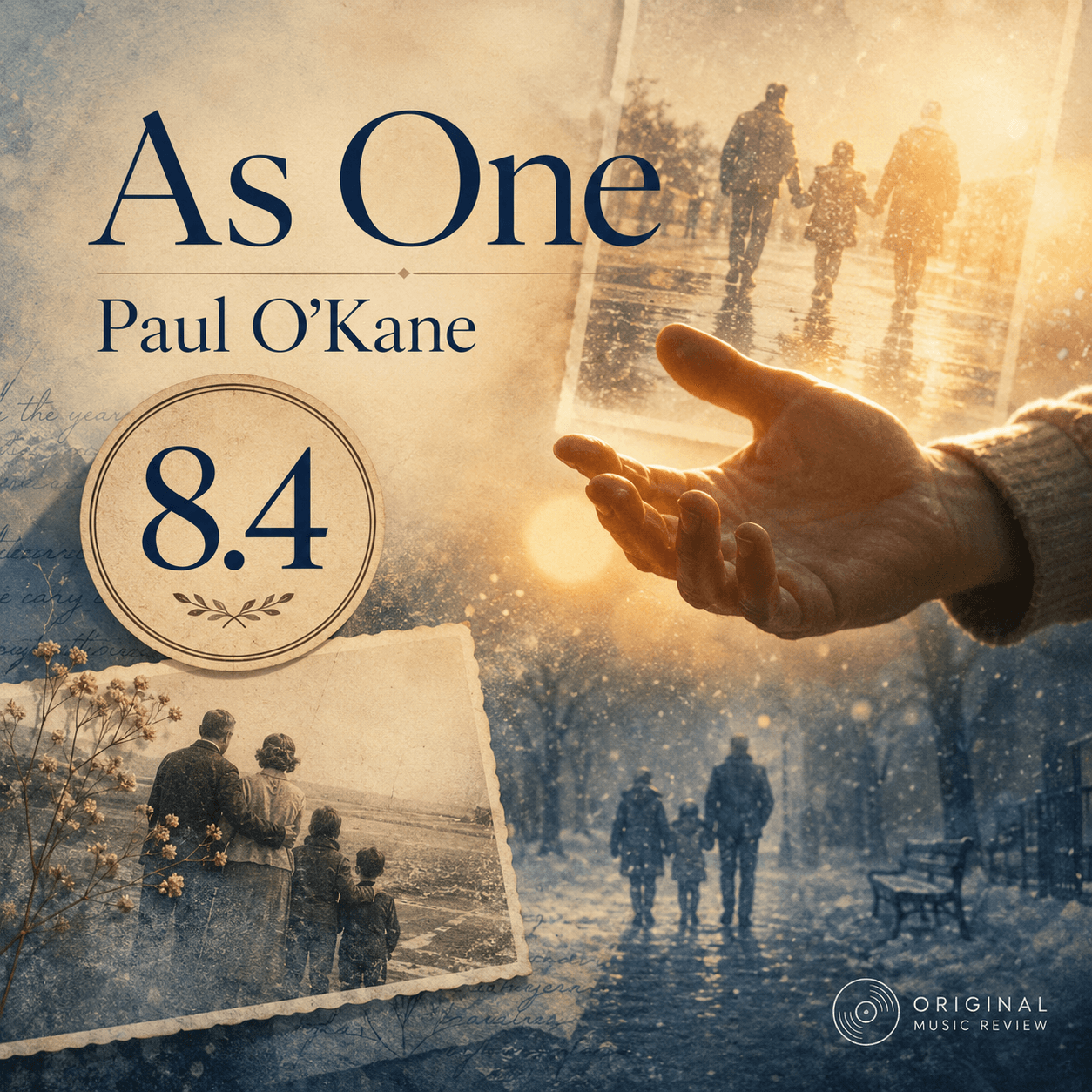
Paul O’Kane — “As One”
Paul O’Kane’s “As One” is a tender pop singer-songwriter piece about loss, family, and spiritual nearness. Written in 2003 and recorded decades later, it carries the feeling of a song that had to wait until the right moment to speak.

Terry Davies — “831”
Terry Davies’ “831” is a deeply personal romantic ballad built around memory, marriage, music, travel, and parenthood. Its sentiment is unashamedly direct, but the specificity of its images — Spain, Arizona, Dubai, the stage, and the arrival of a son — gives the song a lived-in emotional weight.